Un site du patrimoine mondial UNESCO unique
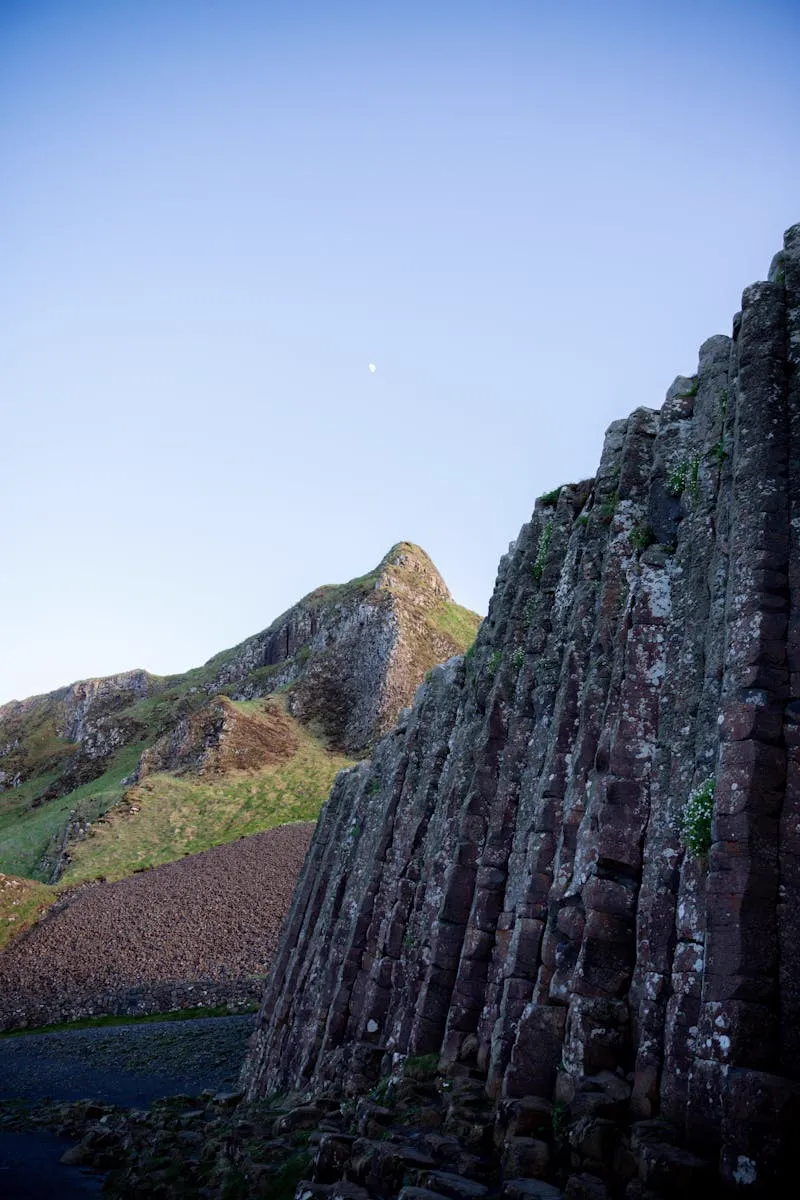
Le Giant's Causeway sur la cote nord d'Antrim est le seul site du patrimoine mondial de l'UNESCO en Northern Ireland et l'un des paysages naturels les plus remarquables d'Europe. Environ 40 000 colonnes de basalte imbriquees emergent de la mer, formant un nid d'abeilles presque geometriquement parfait de marches hexagonales qui s'etendent dans l'Atlantique. Inscrit au patrimoine mondial depuis 1986, le Causeway attire pres d'un million de visiteurs par an et reste l'attraction touristique la plus populaire de Northern Ireland. Que vous veniez pour la geologie, la mythologie ou simplement la beaute dramatique du littoral, il depasse rarement les attentes.
Comment les colonnes se sont formees
Les geologues datent la formation du Giant's Causeway a environ 50 a 60 millions d'annees, durant une periode d'intense activite volcanique. De la lave de basalte en fusion a jailli a travers des lits de craie et, en refroidissant rapidement, s'est contractee et fracturee en colonnes polygonales remarquablement regulieres. La plupart des colonnes sont hexagonales, bien que certaines aient quatre, cinq, sept ou meme huit cotes. Les colonnes les plus hautes mesurent environ 12 metres, et la lave solidifiee dans les falaises atteint jusqu'a 28 metres d'epaisseur par endroits. Une lecon de geologie gravee dans la pierre qui continue de fasciner scientifiques et visiteurs.
La legende de Finn McCool
Bien avant que les geologues n'offrent leur explication, les Irlandais avaient leur propre recit. Selon la legende, le geant irlandais Finn McCool construisit la chaussee comme passage vers l'Ecosse pour defier le geant ecossais Benandonner. Quand Finn vit l'enorme taille de son rival approchant par la mer, il s'enfuit chez lui et sa femme Oonagh le deguisa en bebe. Quand Benandonner arriva et vit la taille du pretendu nourrisson, il supposa que le pere devait etre veritablement colossal et repartit en Ecosse terrorise, arrachant la chaussee derriere lui. Des colonnes de basalte identiques dans la grotte de Fingal sur l'ile ecossaise de Staffa donnent a la legende une note geographique satisfaisante.
Sentiers de randonnee au Causeway
Plusieurs itineraires de randonnee s'offrent a vous. Le chemin principal du centre des visiteurs aux pierres est un sentier pave et facile d'environ un kilometre dans chaque sens, adapte a tous les niveaux de forme. Pour une experience plus enrichissante, empruntez le sentier des falaises qui surplombe les colonnes, offrant des vues panoramiques sur la cote et les formations en contrebas. Les Shepherd's Steps offrent un chemin plus raide mais plus court pour remonter. Prevoyez au moins 90 minutes si vous comptez descendre, explorer les pierres et revenir par les falaises. Par temps clair, la vue depuis le sentier superieur s'etend jusqu'au Donegal et aux iles ecossaises.
Le centre des visiteurs
Le Giant's Causeway Visitor Experience, prime et gere par le National Trust, se trouve au sommet de la colline au-dessus des pierres. A l'interieur, vous decouvrirez des expositions interactives sur la geologie, l'ecologie et la mythologie du site, ainsi qu'un audioguide disponible en plusieurs langues. Il y a une boutique bien fournie et un cafe servant des plats chauds et des boissons. L'entree au centre des visiteurs inclut le parking principal. Les membres du National Trust entrent gratuitement. Le centre est ouvert toute l'annee, bien que les horaires soient reduits en hiver. Arriver avant 10 heures ou apres 15 heures en ete vous aide a eviter la plus grande affluence.
Itineraire depuis Belfast
Le Giant's Causeway se trouve a environ 97 kilometres au nord de Belfast, et le trajet dure environ une heure et 20 minutes par l'A26 via Ballymena et Ballymoney. Pour une approche plus panoramique, suivez la Causeway Coastal Route par l'A2, qui ajoute du temps mais vous recompense avec des vues imprenables a travers les Glens of Antrim et devant Carrick-a-Rede. Si vous recuperez une voiture a Belfast International Airport, dirigez-vous vers le nord par la M2 et suivez l'A26. Depuis Belfast City Airport, prenez la M2 via le Westlink. Le GPS vous guidera facilement jusqu'au parking du centre des visiteurs.
A combiner avec les attractions proches
Le Causeway se situe sur l'un des troncons cotiers les plus riches en attractions d'Irlande. Le Carrick-a-Rede Rope Bridge est a seulement 10 minutes a l'est et offre une traversee palpitante au-dessus des vagues. L'Old Bushmills Distillery, la plus ancienne distillerie de whiskey autorisee au monde, est a deux minutes en voiture. Dunluce Castle, une ruine spectaculaire au bord de la falaise, est a 10 minutes a l'ouest. Les Dark Hedges, rendues celebres par Game of Thrones, sont a environ 20 minutes au sud. Avec une voiture de location, vous pouvez confortablement visiter tous ces sites en une journee depuis Belfast. Combinez avec une visite auxThe Dark Hedges, à seulement 20 minutes à l'est.
Conseils pratiques
- Stationnement : Le parking principal au centre des visiteurs coute entre huit et treize livres selon la saison et inclut l'entree. Arrivez tot en ete.
- Meilleure periode : De mai a septembre pour le meilleur temps, mais le printemps et l'automne offrent moins de monde et des ciels dramatiques.
- Comment s'habiller : La cote est exposee et ventee. Apportez des couches, une veste impermeable et des chaussures robustes avec grip pour les rochers.
- Accessibilite : Le chemin principal vers les pierres est pave et accessible en fauteuil roulant. Une navette circule entre le centre des visiteurs et le Causeway pour les personnes a mobilite reduite.
- Temps necessaire : Prevoyez deux a trois heures pour profiter du centre des visiteurs, marcher jusqu'aux pierres et explorer le sentier des falaises.
- Conseil location : Une voiture compacte est parfaite pour les routes cotieres. Reservez via Northern Ireland Car Hire pour les meilleurs tarifs aux aeroports de Belfast.