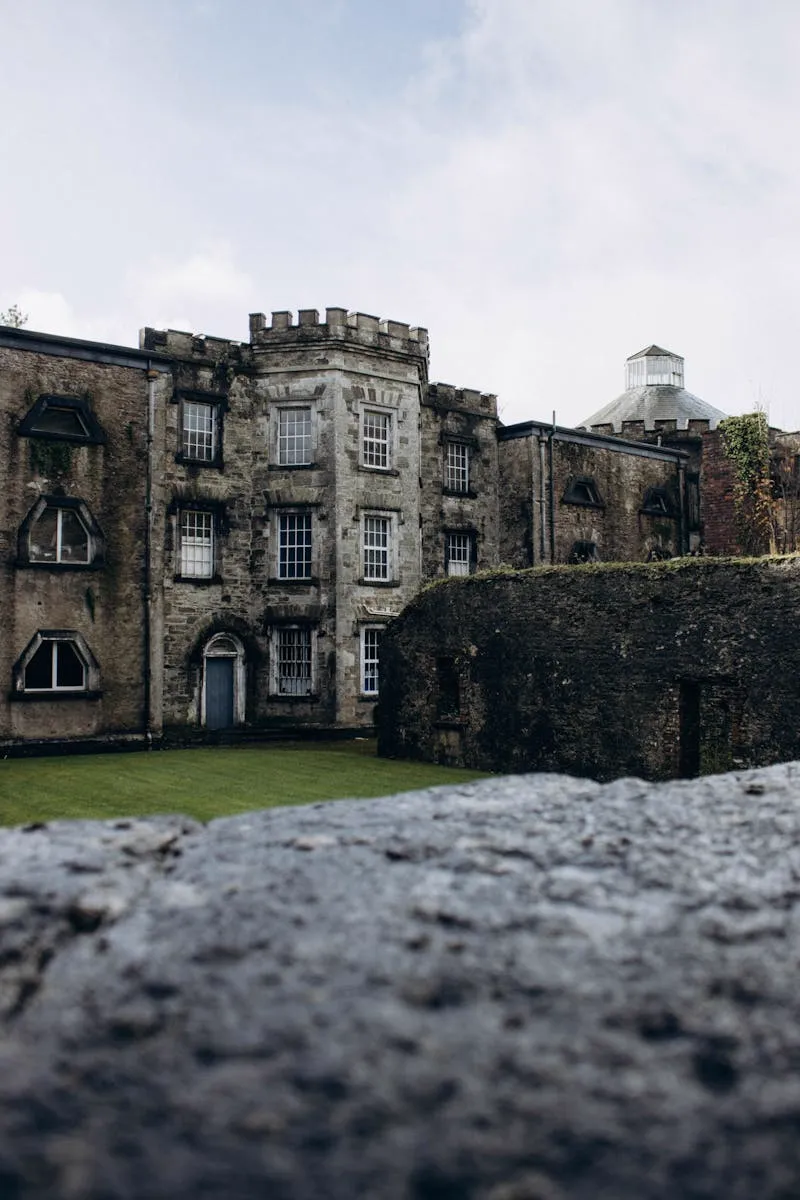
Cork, Ireland's Real Capital (Ask Anyone from Cork)
Every person from Cork will tell you the same thing: Dublin may be the capital on paper, but Cork is the real capital of Ireland. They say it with a straight face and a twinkle in the eye, and after a few days here you'll start to believe them. Built on the River Lee, which splits into two channels through the centre, Cork is compact, walkable, packed with character, and home to the best food scene on the island. The English Market, trading since 1788, visited by Queen Elizabeth II in 2011, and still the beating heart of the city, is reason enough to come. But Cork has layers beyond the food: a thriving arts scene, a fierce local pride, and an energy that's distinctly its own.
A car in Cork opens up everything. The city itself is small enough to walk, but beyond it lies West Cork, the Beara Peninsula, the starting point of the Wild Atlantic Way, and Kinsale, Ireland's gourmet harbour town, all within easy reach. Rural Cork is a patchwork of fishing villages, hidden beaches, and winding coastal roads that reward anyone willing to slow down, take the scenic route, and stop for chowder when the mood strikes.
Cork sits at the head of one of the largest natural harbours in the world. Cobh, pronounced 'Cove', where the Titanic made its last port of call, is fifteen minutes downstream. The surrounding countryside is rolling green hills and river valleys that make for beautiful, easy driving. It's a softer, gentler Ireland than the rugged west, and no less captivating.
Getting Around Cork
The city centre sits on an island between the two channels of the River Lee, which makes the layout slightly confusing until you get your bearings. Patrick Street and Grand Parade are the main arteries. Multi-storey car parks are scattered through the centre and on-street parking is pay-and-display.
The N25 ring road bypasses the centre if you're heading east or west. Kinsale is south on the N71. Killarney and Kerry are west on the N22. Roads range from excellent dual carriageways to narrow country lanes, especially in West Cork and the Beara Peninsula, where you might need to reverse for an oncoming tractor. Consider it part of the charm. Collect your car atCork Airportand start exploring immediately.
The English Market
If there is one place in Cork that justifies the food capital claim, this is it. Trading since 1788, the covered English Market sells fresh local produce, artisan cheeses, freshly baked bread, fish pulled from the harbour that morning, and Cork specialties you won't find anywhere else, tripe and drisheen if you're feeling brave, spiced beef (a Cork Christmas tradition so good people eat it year-round), and farmhouse cheeses from the surrounding countryside that could hold their own in any French market. Open Monday to Saturday, busiest at lunchtime, and absolutely not to be missed.
Arts & Culture
Cork punches above its weight culturally. The Crawford Art Gallery (free, excellent Irish collection) is in the centre. The Everyman Theatre and numerous independent galleries and live music venues keep the evenings lively. Cork hosts the Jazz Festival in October, the Film Festival in November, and the Midsummer Festival in June. The Shandon area, topped by St Anne's Church and its famous bells, is worth the steep climb for the panoramic views and the colourful terraced houses on the way up.
Beyond the English Market
Cork's food scene extends well beyond the market. The city is home to a growing number of restaurants doing inventive things with local ingredients, world-class dairy, beef, and seafood from the surrounding countryside and fishing ports. Cork's seafood chowder is legendary and every restaurant has their own version, each claiming theirs is the best (they're all right). The city is also at the heart of Ireland's craft beer scene, with several breweries offering tours and tastings. If you visit one, make it Rising Sons or Franciscan Well.
Cobh, Where the Titanic Said Goodbye
Fifteen minutes from Cork city, the colourful harbour town of Cobh was the last port of call for the RMS Titanic before she headed out across the Atlantic in April 1912. The Cobh Heritage Centre tells the story of Irish emigration and the Titanic connection. The town rises steeply from the harbour, rows of brightly painted Victorian houses leading up to the imposing St Colman's Cathedral. It's one of the most photogenic small towns in Ireland. Reach it by car in fifteen minutes or take the commuter train from Cork Kent Station.
Day Trips from Cork
Kinsale is thirty minutes south and worth every minute. Known as the gourmet capital of Ireland (Cork disputes this), it offers colourful streets, excellent restaurants, and the historic Charles Fort, a seventeenth-century star fort with sweeping harbour views. Walk the Scilly Path along the waterfront, browse the galleries, and settle in for a long seafood lunch by the harbour. You'll understand why half of Dublin seems to have a holiday home here.
Blarney Castle is fifteen minutes from Cork city centre. Kiss the Stone of Eloquence for the gift of the gab (you hang backwards off a parapet, which is more alarming than the brochures suggest), then explore the grounds, the Poison Garden, the Rock Close with its ancient stones and tunnels, and the lovely parkland. Allow two hours minimum.
West Cork is where Cork people go to escape, and it's easy to see why. Clonakilty, Skibbereen, Baltimore, and the coastline of the Mizen Peninsula offer a pace of life that drops several gears the moment you leave the city. Every village seems to have an artisan bakery, a craft shop, and a pub with live music. The drive from Cork to Mizen Head takes about two and a half hours, but you'll want to stop every twenty minutes.
The Beara Peninsula, shared between Cork and Kerry, is one of Ireland's genuine hidden gems. The Healy Pass, a narrow road climbing between the Caha Mountains with sheer drops and views that make your palms sweat, is one of the most thrilling drives in the country. The peninsula is dotted with stone circles, ancient ruins, and tiny fishing harbours where the pace of life makes West Cork look hectic.
Questions We Get Asked a Lot
A full driving licence, a passport or national ID, and a physical credit card in the main driver's name, plus an International Driving Permit if your licence isn't in English. Cork is in the Republic, so everything is priced in euros.
One-way rentals are available, and you can drive north across the invisible border into Northern Ireland, provided the supplier permits cross-border travel. Select or declare both when you book so any one-way fee or cross-border charge is arranged and shown before you pay.
Third-party liability and collision damage waiver, taxes, and a transparent fuel policy, with zero-excess cover available as an optional extra. The price you see at booking is the price you pay, with no hidden desk charges.
Most rates include free cancellation up to 48 hours before pickup, with your prepayment refunded in full. Inside 48 hours, only any coverage add-ons can be refunded. You'll see the exact policy for your car before you confirm.
Easily. Kinsale, often called the start of the Wild Atlantic Way, is about 30 minutes south, and from there the coast unfolds westward through West Cork towards Kerry. A hire car turns Cork into the perfect base for the whole southwest.
There are several multi-storey car parks around the centre plus on-street pay-and-display. Cork's core sits on an island between two channels of the River Lee, so it pays to choose a car park near your destination and walk from there.