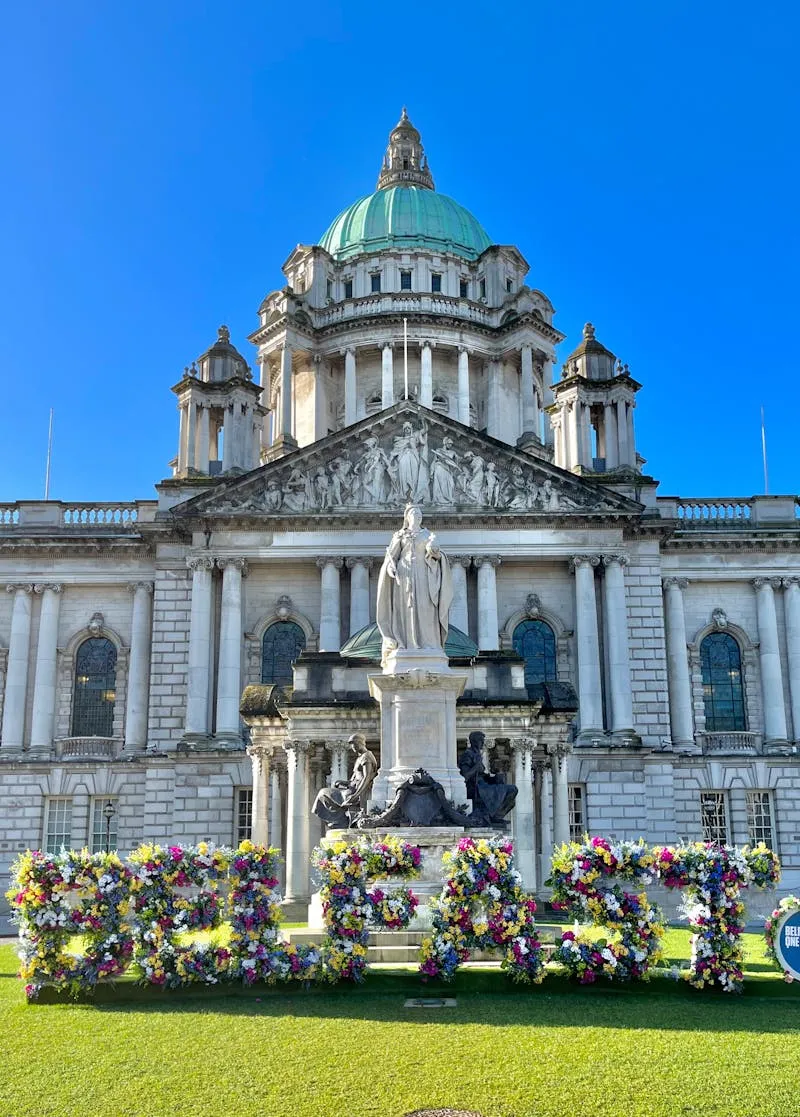
Belfast, A City That Will Catch You Off Guard
People arrive in Belfast expecting.. well, they're not always sure what to expect. What they find is a city in the middle of a fierce reinvention, one that still carries the weight of its history but wears it openly, honestly, and increasingly on its own terms. The Titanic Quarter, built around the shipyard where the most famous ocean liner in history was constructed, is now anchored by a £97 million museum that tells the story from keel to ocean floor. The Cathedral Quarter, once derelict, is packed with pubs, galleries, and live music venues that make Dublin's Temple Bar look like a tourist trap (which, let's be honest, it partly is).
A hire car in Belfast is the key to unlocking the whole region. The city itself is compact enough to walk, and you should, especially around the Cathedral Quarter and the university area, but a car means you can spend the morning at Titanic Belfast and be standing at the Giant's Causeway by mid-afternoon. Or drive through the Mourne Mountains before dinner, and be back in time for a pint in the Duke of York. The entire country is a day trip from Belfast.
The setting helps. Belfast sits at the head of the Lough, framed by Cave Hill to the north (where they say the profile inspired Gulliver's Travels), Black Mountain to the west, and the Castlereagh Hills east. Countryside is never more than fifteen minutes from the centre. This combination of gritty urban character and easy access to wild, open landscapes is what makes Belfast special, and what makes a car essential if you want to experience both sides.
Driving Around Belfast
Belfast is manageable by UK city standards. The Westlink dual carriageway along the western edge connects the M1 (south to Dublin and the Mournes) with the M2 (north to the airport and Causeway Coast). Rush hour traffic on the Westlink between 8-9am and 5-6pm is the only real headache, avoid it and the roads are clear. The city centre is compact and well-signposted.
Parking is straightforward. Multi-storey car parks at Victoria Square, CastleCourt, and near the Cathedral Quarter charge three to five pounds for a couple of hours. On-street pay-and-display is available on many streets, with free parking on Sundays in most spots. The Titanic Quarter has its own massive car park. Street parking in residential areas like the university quarter is generally easy and free in the evenings. See our full guide today trips from Belfast by car.
What to See and Do
Titanic Belfast
This is the centrepiece. Nine interactive galleries inside a building shaped like the ship's prow, telling the full Titanic story from the industrial Belfast that built her to the discovery of the wreck on the ocean floor. Allow two to three hours minimum. Outside, explore the Titanic Slipways, the SS Nomadic (the last remaining White Star Line vessel), and look up at Samson and Goliath, the twin yellow cranes that have defined Belfast's skyline since the 1960s. Titanic Belfast cost £97 million to build and is worth every penny of the admission.
Cathedral Quarter
This is where Belfast comes alive after dark. Cobbled streets around St Anne's Cathedral, packed with independent bars, live music, street art, and some of the best restaurants in the city. The Duke of York, tucked down a narrow alley plastered with old advertising signs, is one of the most photographed pubs in Northern Ireland. The MAC arts centre, the Black Box venue, and the annual Cathedral Quarter Arts Festival make this the cultural heartbeat of the city. On weekends, live music spills out of every other doorway and you'll find yourself three pints deep before you've decided where to eat.
Political Murals & Peace Walls
Belfast's history is painted on its walls, literally. The murals on the Falls Road (republican) and Shankill Road (loyalist) are a powerful, sometimes unsettling window into the city's recent past. Black taxi tours give you the stories behind the images and the peace walls that still divide some neighbourhoods, walls up to eight metres high, some with gates that close at night. You can drive these routes yourself, but a guided tour adds layers of personal testimony you won't get from a car window. The murals are continually updated and repainted, making them a living art form. This is political tourism at its most raw and honest.
Queen's Quarter
The area around Queen's University is Belfast at its most handsome. Tree-lined streets of Victorian and Edwardian terraces surround the Tudor Gothic main building (designed by Charles Lanyon, who designed half of decent Belfast). The Botanic Gardens are here, along with the Ulster Museum, which covers art, natural history, and archaeology with free admission. The area is full of cafes, bookshops, and restaurants. Lovely on a dry afternoon, which in Belfast means you should seize the moment when you get one.
Botanic Gardens & Ulster Museum
The Palm House in the Botanic Gardens is one of the earliest curvilinear cast-iron glasshouses in the world, dating from the 1840s and stuffed with exotic plants. The recently restored Tropical Ravine is a sunken glen of tropical foliage beneath a Victorian glass roof, genuinely unexpected in a city this far north. Next door, the free Ulster Museum has everything from an Egyptian mummy to Irish antiquities and a solid contemporary art collection. All free, all worth a rainy afternoon, and in Belfast, you'll have plenty of those.
Eating and Drinking
Belfast's food scene has exploded. St George's Market, Friday, Saturday, and Sunday in a beautiful Victorian red-brick hall, is the place to graze: local produce, artisan bread, fresh seafood, and street food from everywhere. The restaurant scene ranges from Michelin-recommended spots to casual bistros doing inventive things with local ingredients. But the real joy is the pub culture. The Crown Liquor Saloon on Great Victoria Street is a Victorian masterpiece owned by the National Trust, ornate snugs, gas lamps, and a pint that tastes better for the surroundings. The Duke of York in the Cathedral Quarter is another essential stop. Belfast is a proper drinking city, in the best possible way.
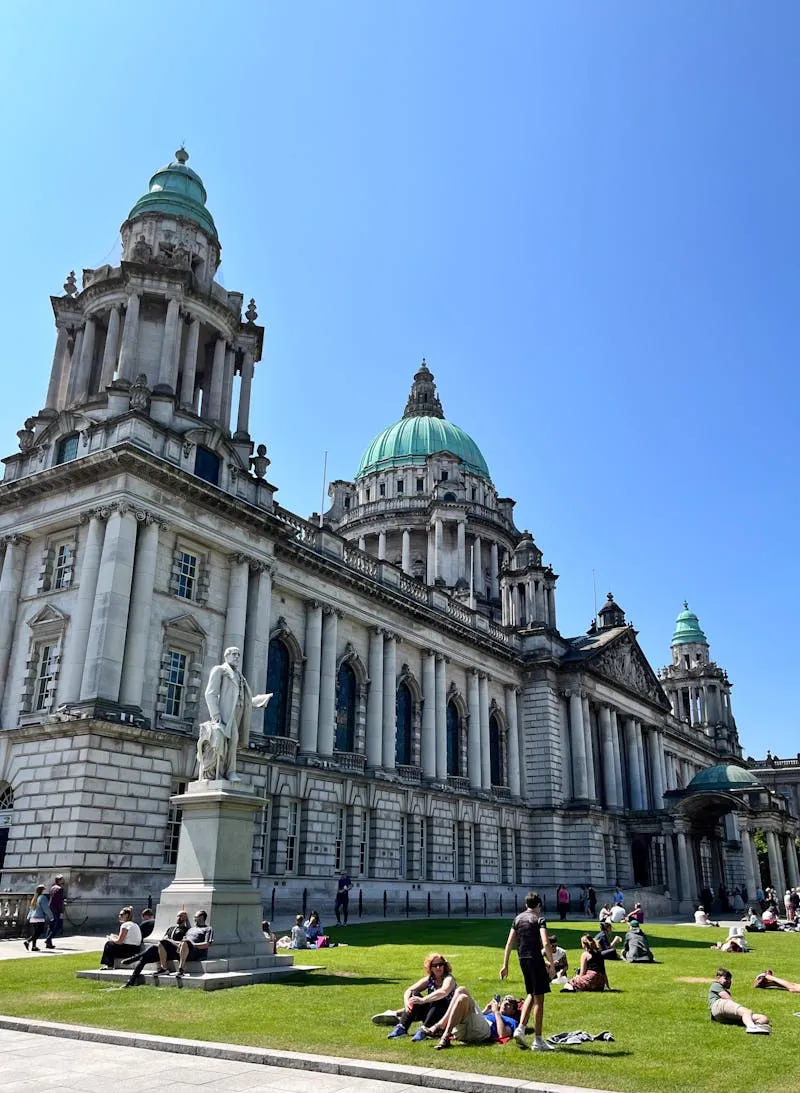
Day Trips from Belfast
Everything is close. Giant's Causeway: 80 minutes north. Mourne Mountains: an hour south. Dublin: two hours on the M1. Portrush and Portstewart: easy day trips for surf and seafood. Strangford Lough and the Ards Peninsula: 45 minutes east. Derry/Londonderry: 90 minutes northwest. Glens of Antrim: an hour to Cushendall. With a hire car, you can explore a different part of Northern Ireland each day and be back in Belfast for dinner and a session in the Cathedral Quarter every evening.
Questions We Get Asked a Lot
We do. Collect in Belfast and drop off in Dublin, Cork or another location to suit your route. Pick your points when you search and any one-way fee is shown before you commit, no surprises at the counter.
It can, as long as the supplier permits cross-border travel, so select or declare it when you book. Third-party liability and a collision damage waiver come with most rates, and you can add Full Coverage to buy down the excess. Some suppliers apply a small cross-border fee, shown before you pay.
A full driving licence, a passport or national ID, and a physical credit card in the lead driver's name. Bring an International Driving Permit as well if your licence isn't in English. Everything is priced in pounds sterling here in Northern Ireland.
Most bookings come with free cancellation up to 48 hours before pickup, which refunds your prepayment in full. Cancel within 48 hours and only any coverage add-ons are refundable. The exact terms for your chosen car are shown clearly before you book.
For the city centre alone, not really, it's compact and walkable. But a car is what unlocks the rest of Northern Ireland: the Giant's Causeway, the Mourne Mountains and the Glens of Antrim are all easy day trips and awkward to reach any other way.
Plenty. The Giant's Causeway is about 80 minutes north, the Mournes an hour south, the Glens of Antrim an hour up the coast, and Derry roughly 90 minutes northwest. Dublin is two hours down the M1, so you can explore a different corner each day.